Offshore coating work fails for boring reasons. Not exotic chemistry, not a bad product. It fails because somebody sprayed onto a surface that was three degrees too cold, or because the blast profile was wrong, or because the weather window closed and the crew pushed on anyway to avoid losing the day.
The coating itself is rarely the weak point. Modern offshore systems do what the data sheet says they will do. What varies is the preparation and the conditions on the day, and both of those are planning problems more than technical ones.
Surface preparation decides the outcome
Adhesion depends on two things: how clean the steel is and how rough it is. Get either wrong and the best coating on the market will disbond inside a couple of years.
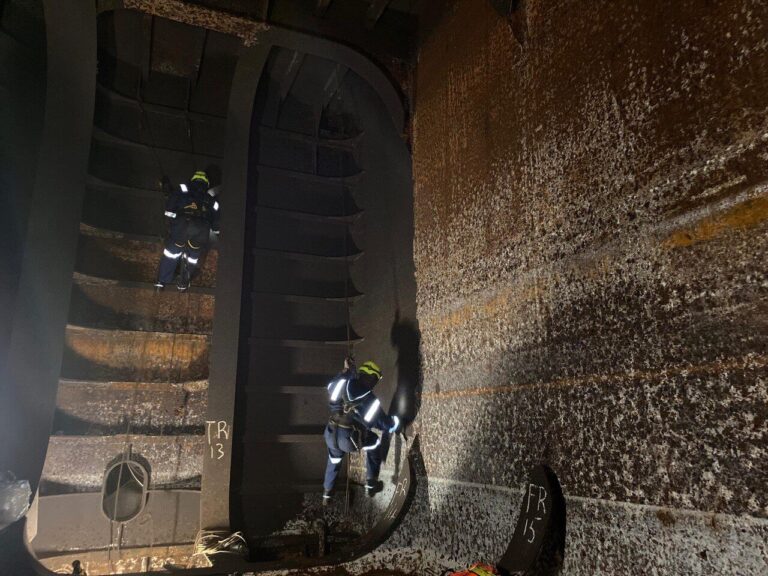
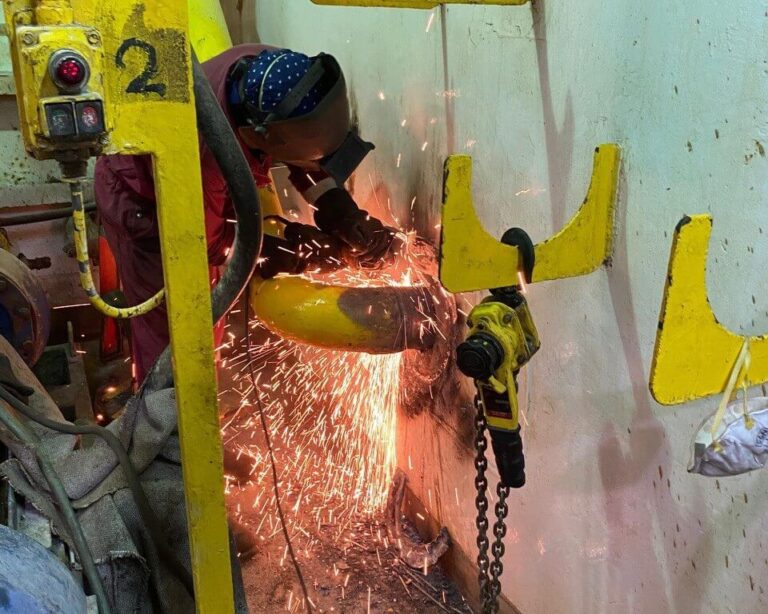
Cleanliness is measured against ISO 8501-1. Most offshore specifications call for Sa 2½, a near white metal blast where the surface is free of oil, scale, rust and old coating, with only faint shading permitted. Getting there on a structure that has been in service for fifteen years takes longer than the estimate usually allows, particularly around welds and behind brackets where corrosion products sit in pits.
Roughness matters just as much. The blast profile gives the coating something mechanical to key into. Too shallow and adhesion suffers. Too aggressive and the peaks stand proud of the first coat, which then corrodes from those high points outward. The abrasive grade and nozzle pressure control this, and they need checking during the work rather than agreeing once at the start.
Soluble salt is the one people miss
Offshore steel carries chloride contamination. Blasting removes visible rust but does not remove salt sitting in the pits, and salt left under a coating pulls moisture through the film by osmosis. The result is blistering that appears months after the crew has demobilised, usually in the splash zone where it is most expensive to reach again.
Salt testing before priming takes minutes. Skipping it is one of the most common reasons a coating campaign has to be repeated.
Working inside the weather window
Two numbers govern whether you can spray at all. Relative humidity, and the gap between steel temperature and dew point.
The standard rule is that steel temperature must sit at least three degrees above the dew point during application and while the coating cures. Below that, moisture condenses on the surface as an invisible film, and the coating goes down onto water rather than steel.
Offshore, that gap can close in an hour. Steel cools faster than air after sunset, and a structure shaded by a deck above behaves differently from one in direct sun on the same platform. Measuring conditions at the workface rather than at the accommodation block is the difference between a coating that lasts and one that comes back as a warranty claim.
This is where campaign scheduling earns its keep. Planning a large external scope into a season with narrow windows means accepting that productive spraying hours will be a fraction of manned hours, and building the vessel and crew duration around that reality instead of hoping for it.
Access method changes what is achievable
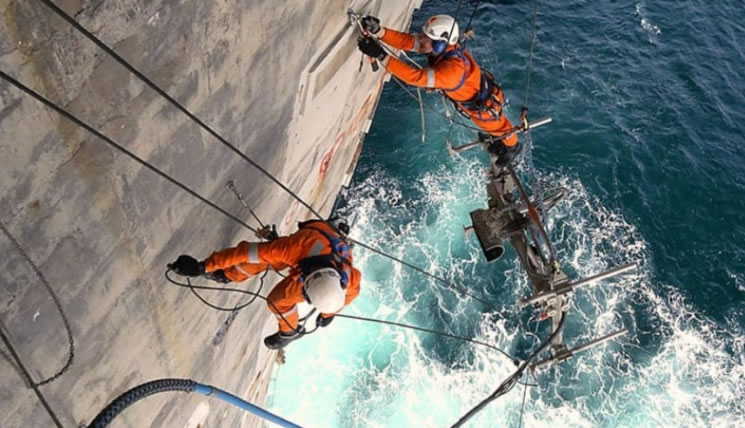
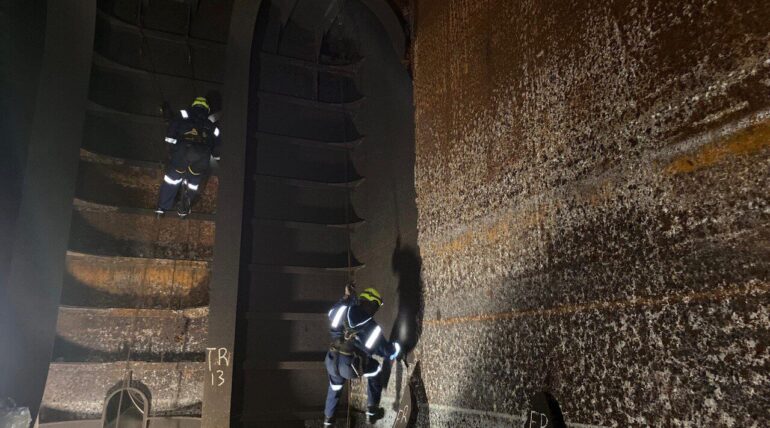
Scaffolding a splash zone or a flare structure takes weeks before any preparation starts, and the scaffold itself blocks access to the steel behind it, which then needs a second visit. Rope access removes that sequencing problem, since technicians reach the workface directly and move as the work progresses.
The trade off is containment. Open blasting from ropes is not always permitted, particularly near live process equipment or on assets with strict environmental limits, and the alternatives such as vacuum blasting or hydro blasting have different production rates that need to be in the plan from the start rather than discovered offshore.
We compared the wider cost and downtime picture between the two access methods in our article on rope access versus scaffolding for offshore maintenance.
Specifying a system that suits the zone
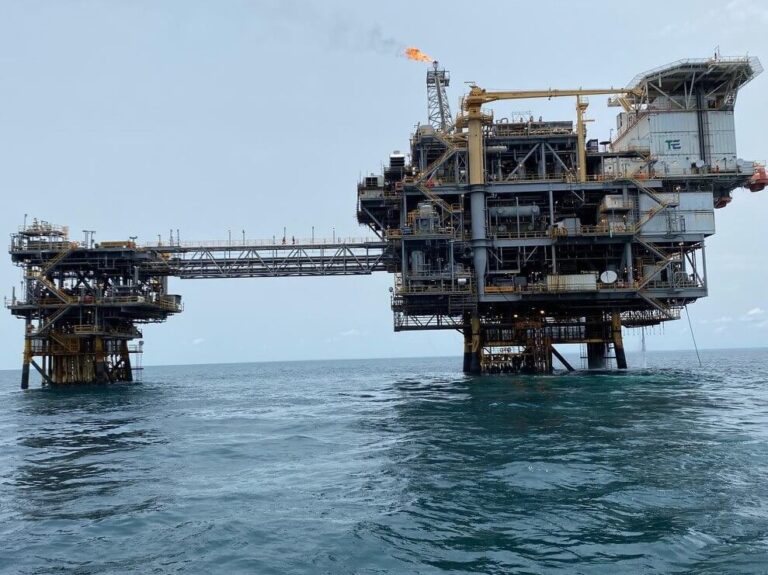
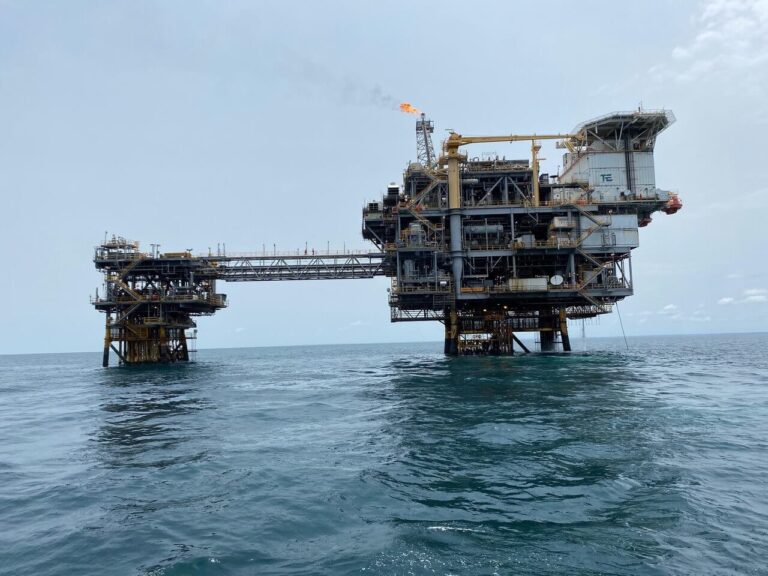
A platform is not one environment. Atmospheric steel above the splash zone, the splash zone itself, and immersed or buried steel each degrade differently and each need a different system.
The splash zone is the punishing one. Alternating wet and dry cycles, abrasion from wave action and floating debris, and full oxygen availability combine to strip protection faster than anywhere else on the structure. Systems here are usually thicker, often glass flake reinforced, and they justify the extra cost through service life rather than through material price.
Atmospheric steel above that zone generally runs a zinc rich primer with intermediate and topcoat layers. The topcoat carries the colour and the ultraviolet resistance, but the primer does the protecting, which is why cutting the primer specification to save budget rarely ends well.
Inspection during, not after
Coating quality cannot be assessed once the topcoat is on. By then the preparation, the primer and the film build are all hidden.
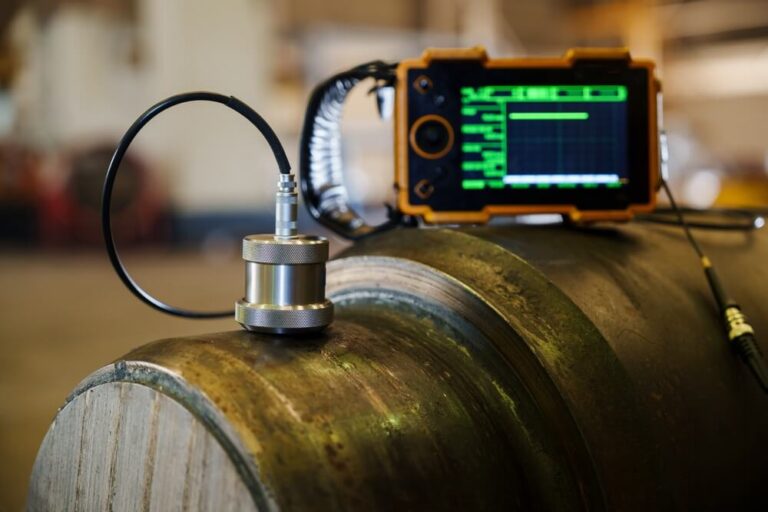
Hold points during the work are what make the finished job verifiable. Surface cleanliness and profile before priming. Salt testing. Wet film thickness during application. Dry film thickness per coat against the specification, measured across a defined number of readings rather than a couple of convenient spots. Adhesion testing where the specification calls for it.
Those records are also what an operator needs later to evidence asset condition, which ties coating work directly into the wider asset integrity and inspection picture rather than treating it as a cosmetic scope.
Planning your next campaign
Most coating overruns trace back to preparation time being underestimated and weather windows being assumed rather than analysed. Both are fixable at the planning stage and expensive to fix offshore.
Integra Offshore delivers offshore coating and corrosion protection by rope access, including surface preparation, application and the inspection records that go with it. If you have a campaign in planning and want the access method and schedule pressure tested before it goes to tender, get in touch.