Confined space entry has a grim signature in incident data: a substantial share of fatalities are people who went in to help someone else. They enter an atmosphere that has already incapacitated a colleague, without protection, because the instinct to help outruns the training. That single pattern explains why competent confined space planning starts at the rescue plan and works backwards.
What counts as a confined space
The definition is about hazard rather than size. A confined space is an area that is substantially enclosed, that is not designed for continuous occupancy, and where a foreseeable specified risk exists such as an atmosphere that is oxygen deficient, flammable or toxic, or the risk of engulfment or entrapment.
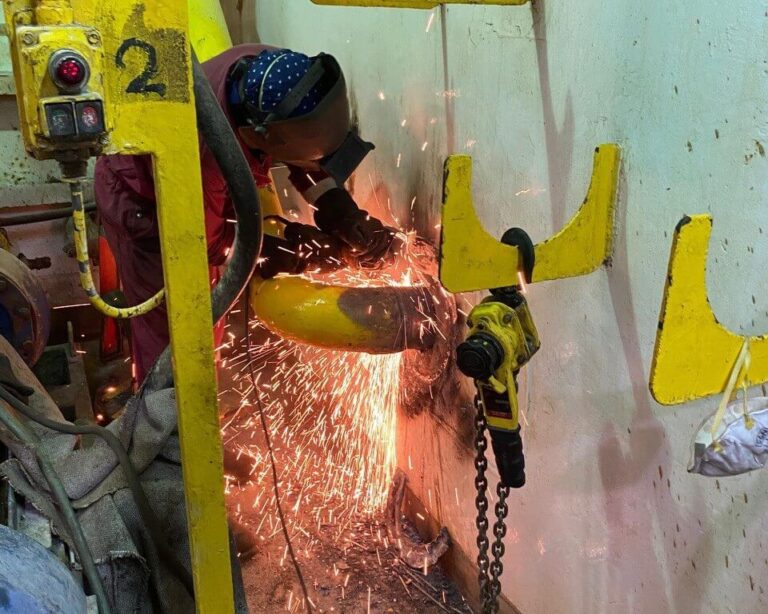
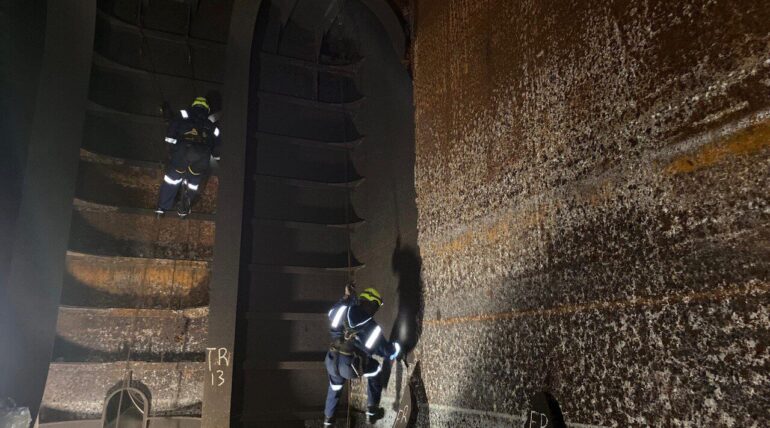
Offshore, that covers more than the obvious tanks. Ballast and cargo tanks, void spaces, cofferdams, caissons, pipe and cable trunking, some machinery spaces, sumps, and vessels opened for internal inspection all qualify. So do spaces that are open at the top but deep enough that heavier than air gases can collect, which is a category people frequently misjudge.
The atmosphere is the primary hazard
Three atmospheric conditions cause most harm, and they can occur together.
Oxygen deficiency develops where oxygen has been consumed by rusting steel, displaced by inert gas from purging, or absorbed by cargo residues. Steel corroding in a closed ballast tank is a highly effective oxygen scavenger, and a tank that has been closed for a long period can be dangerously depleted with no smell, no visible sign and no warning to the person entering.
Flammable atmospheres arise from hydrocarbon residues, sludge disturbed during cleaning, and adjacent systems that have not been fully isolated. The hazard rises during work rather than before it, because disturbing sediment liberates vapour that testing before entry would not have detected.
Toxic atmospheres offshore most often mean hydrogen sulphide, which is produced by bacterial activity in stagnant water and sludge. It is particularly dangerous because it deadens the sense of smell at concentrations well below those that incapacitate, so the usual warning disappears exactly when the risk becomes serious.
Gas testing that reflects the space
Testing before entry establishes that the atmosphere is acceptable at that moment. It does not establish that it will remain so, which is why continuous monitoring during occupancy is standard rather than optional.
The sequence matters. Oxygen is measured first, because the other sensors depend on it to read correctly. Flammable gas is measured next, then toxic gases relevant to the space and its history. Testing must be done at multiple depths, because gases stratify: hydrogen sulphide and many hydrocarbon vapours are heavier than air and collect low, while others rise. A single reading taken at the hatch tells you about the hatch.
Instruments need to be in calibration, bump tested before use, and fitted with a probe long enough to reach the bottom of the space from outside it. Testing a deep tank by climbing in with a detector inverts the entire logic of the control.
Isolation before entry
Everything that could introduce a hazard into the space must be positively isolated. Valves closed and locked are frequently not sufficient, because valves pass. Where the consequence of leakage is severe, physical disconnection or spade and blind isolation gives certainty that a closed valve does not.
Isolation extends beyond process fluids to mechanical and electrical energy: agitators, pumps and any machinery inside or connected to the space, along with anything that could start automatically on a control signal. The isolation must be verified rather than assumed, and it must remain in place and under control for the duration of the entry.
The rescue plan comes first
Before an entry is authorised, there should be a specific answer to a specific question: if the person inside becomes unconscious at the furthest point of the space, exactly how do they come out, with what equipment, operated by whom, within what time?
A plan that relies on summoning help from elsewhere on the facility is usually not fast enough, because atmospheric incapacitation leaves minutes rather than hours. A plan that requires the standby person to enter is not a plan at all, it is the mechanism by which the casualty count doubles.
Workable arrangements normally involve retrieval equipment rigged before entry, a harness and line attached to the entrant, a standby person who remains outside with communication maintained throughout, and rescuers with breathing apparatus available at the location rather than notionally on the facility. Where the geometry of the space makes line retrieval impossible, the difficulty has to be resolved during planning rather than discovered during an emergency.
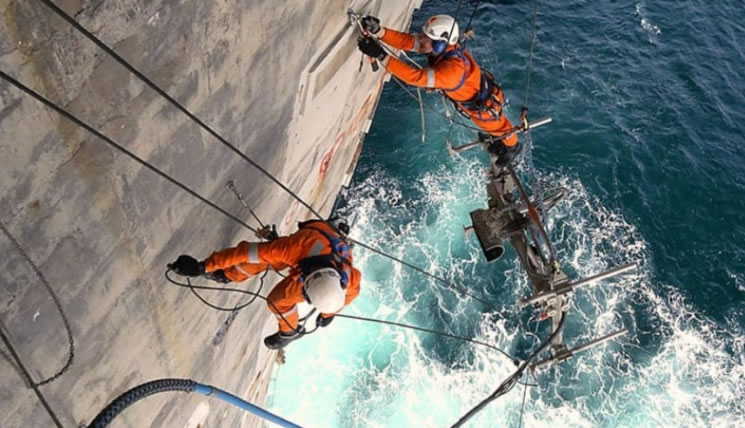
Rope access teams are frequently well suited to this work, because rescue from a difficult position is a core part of their training rather than an add on. The structure of supervision that the IRATA levels establish means a qualified supervisor is present who has been trained and assessed specifically on recovering a casualty.
The permit and the people
The permit to work records the isolations, the test results, the entrants, the standby, the duration and the rescue arrangements. It works when it is written by someone who has seen the space, and fails when it is completed as an administrative step by someone working from a drawing.
Numbers entering should be limited to what the work requires and the rescue plan can handle. Communication has to be continuous, and the standby person needs a single, undivided responsibility. A standby who is also running errands is not a standby.
Inspection inside tanks
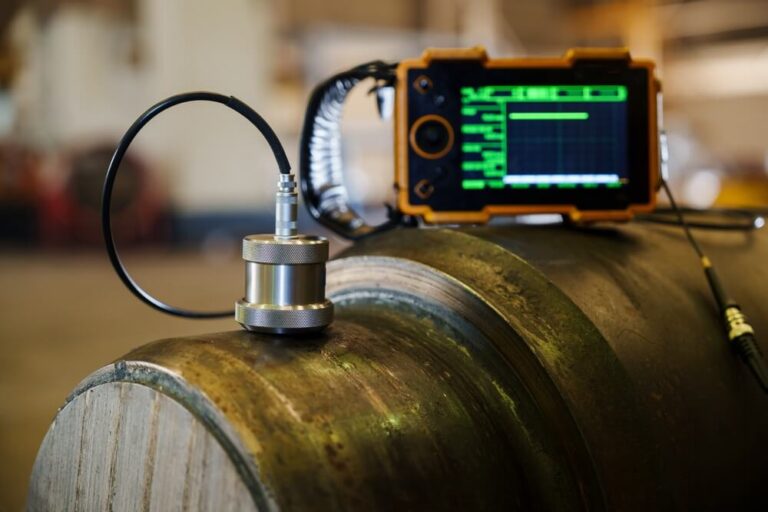
Much confined space entry offshore exists to perform inspection: assessing coating condition, measuring wall thickness and examining structural details inside ballast and cargo tanks. Planning that work well shortens the time anyone spends inside, which is itself a safety control.
Knowing what you are looking for, having the right equipment prepared before entry, and recording findings in a form that supports a decision all reduce occupancy. Our guide to inspection methods that produce decisions applies directly here, because a second entry to gather data that should have been captured the first time doubles the exposure.
Competence is the control that holds everything else up
Every control described above depends on people who understand why it exists. Integra Offshore provides qualified technical manpower for confined space inspection and repair, including trained standby and rescue provision. Contact us to discuss a tank entry scope.