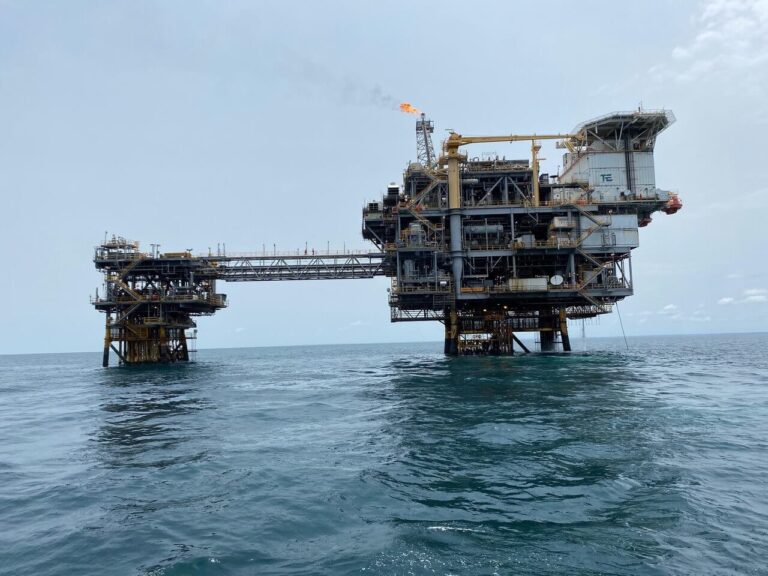
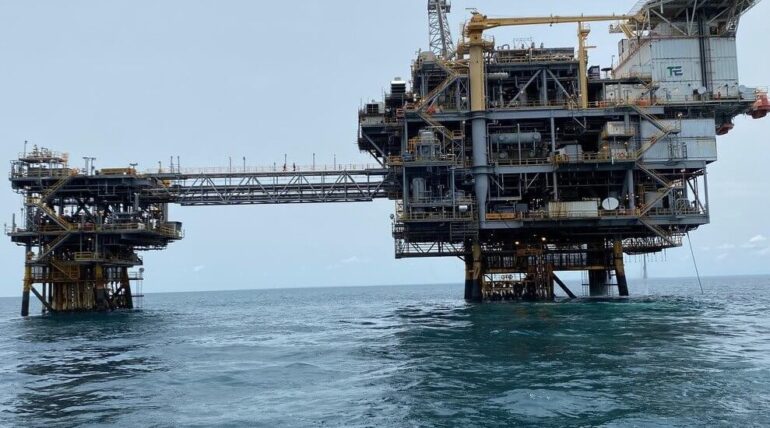
Maintaining a floating production, storage and offloading vessel means dealing with two sets of problems at once. It is a process facility, with pressure systems, rotating equipment and the inspection obligations those bring. It is also a ship, with a hull, ballast tanks, mooring systems and constant motion. Neither discipline on its own describes the asset, and treating an FPSO as a fixed platform that happens to float leads to gaps in the integrity programme.
The hull never comes out of the water
The single largest difference from a trading tanker is that an FPSO stays on station. A trading vessel goes into dry dock on a regular cycle, where the hull is cleaned, inspected and repaired in the dry with full access. An FPSO on a long field life may remain on location for decades without that opportunity.
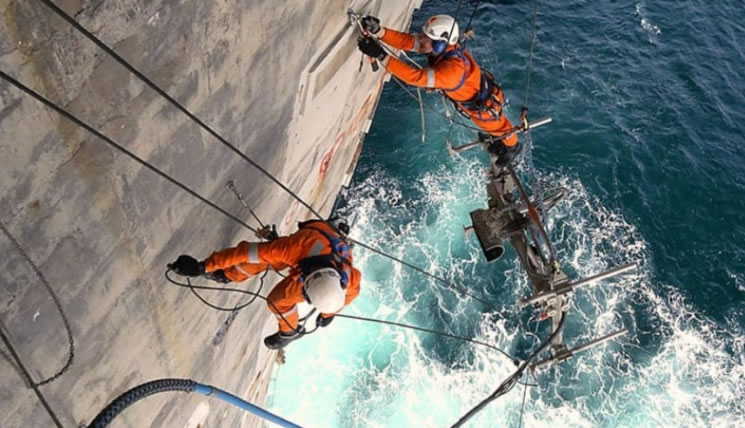
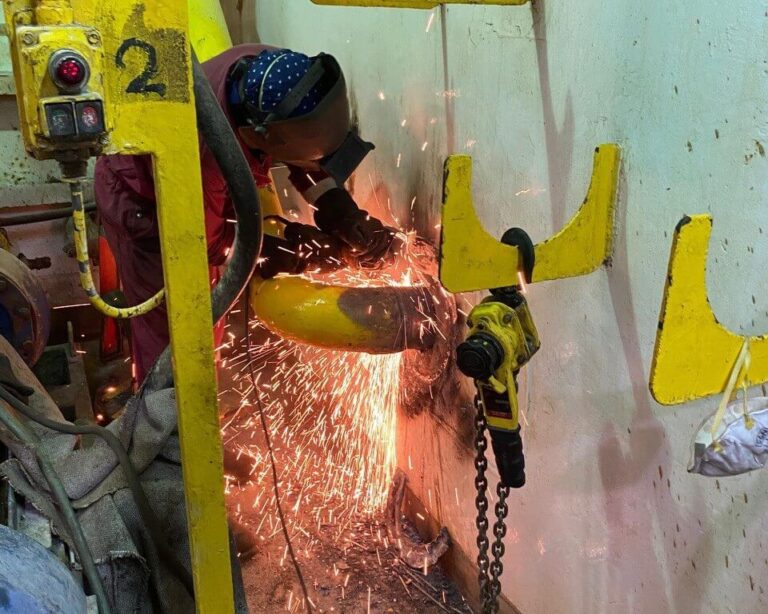
Everything the dry dock would have done therefore has to be done in place, on a live asset, often in water. Underwater inspection in lieu of dry docking becomes a permanent feature of the programme rather than an exception, and topside structural work has to be executed around production rather than during an outage.
This changes what a maintenance strategy has to deliver. On a fixed platform, deterioration can often be managed with periodic campaigns. On an FPSO the same deterioration has to be managed continuously, because there is no future event at which everything gets put right at once.
Motion is a damage mechanism
A moored vessel moves constantly, and that movement loads the structure in ways a fixed jacket never experiences. Cyclic loading drives fatigue at connection details, particularly where the topside modules meet the hull. Module support stools, pipe supports crossing between modules and the hull, and flare tower connections all see cycles that accumulate over the field life.
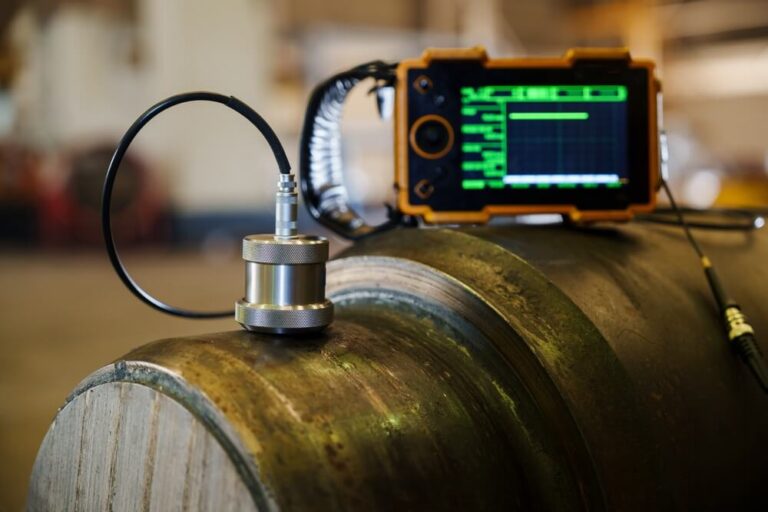
Fatigue cracking behaves differently from corrosion. It is local, it is often invisible until it is significant, and it is not slowed by coating. Finding it requires inspection aimed at the details where stress concentrates, using methods capable of detecting surface breaking cracks such as magnetic particle inspection, rather than the thickness measurement that dominates corrosion monitoring. The distinction matters, and we cover method selection in more detail in our guide to choosing inspection methods that produce decisions.
Ballast and cargo tanks
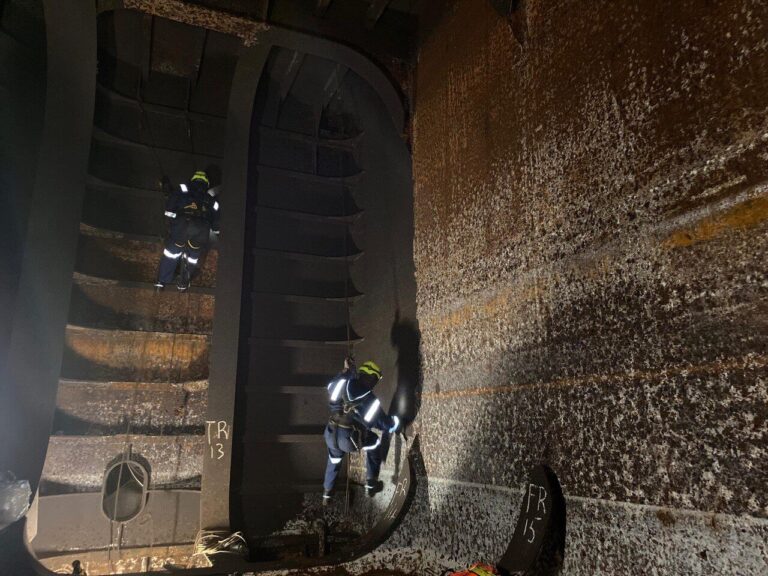
Tank internals are among the most demanding inspection environments on any asset. They are confined spaces, they may be coated to a marine specification that has aged, and on an FPSO they may be inspected far less often than on a vessel following a classification dry docking cycle.
Ballast tanks in particular combine seawater, alternating wet and dry conditions and limited coating life. Where the coating has broken down, corrosion proceeds quickly, and access for repair is difficult enough that deterioration often runs further than it would in an accessible location. Entry requires the full confined space regime: isolation, gas testing, continuous monitoring, standby personnel and a rescue plan that can actually be executed through the access hatch that exists.
Turret, moorings and risers
The turret and mooring system have no equivalent on a fixed installation. Mooring chains and their connectors are safety critical, they are difficult to inspect, and their condition drives decisions about the vessel’s ability to stay on station in design conditions. Chain wear, corrosion at the splash zone and fatigue at connectors are all credible mechanisms, and inspection intervals are usually driven by class requirements as much as by operator preference.
The turret area itself concentrates complexity: swivel systems, riser connections and piping crossing between a rotating and a fixed structure, in a location where access is restricted. Work here needs careful planning precisely because there is so little room to improvise.
Access defines what is achievable
On an FPSO the practical constraint on integrity work is almost always access. The hull sides, the underdeck, module supports and the flare tower are all difficult to reach, and scaffolding either cannot be built or occupies deck space that production needs.
Rope access is the method that fits this asset best, because it is fast to deploy, leaves no permanent footprint, and can reach the vertical and underslung locations where the fatigue and corrosion actually occur. Where technicians hold both rope access and inspection qualifications, a single team can survey, measure, repair and coat without repeated mobilisations to the same location.
Coating in a marine environment
Coating on an FPSO faces the harshest conditions of any offshore asset: continuous salt exposure, splash zone wetting, ultraviolet degradation and mechanical damage from routine operations. It also has to be applied on a live facility, in weather windows dictated by the sea rather than by the schedule.
The failure modes are the ones we describe in our post on why coating campaigns fail. Preparation quality and honest weather windows determine coating life far more than product selection, and on a vessel that will not see a dry dock, coating life is directly steel life.
A continuous programme, not a campaign
The strategy that works on floating production is a rolling programme in which inspection continuously refreshes the target list, repairs are executed as findings arrive, and the asset never accumulates a backlog that would need an outage to clear.
Integra Offshore supports FPSO, drilling and heavy equipment operations with rope access teams qualified for inspection, fabrication and coating. Contact us to discuss a programme for your vessel.