When a structural repair fails an inspection offshore, the cause is rarely a welder having a bad day. It is far more often a gap in the documentation chain that should have been closed onshore: a procedure that was never qualified for the joint in question, a welder qualified on a different position, or a consumable that was stored badly and picked up moisture. Coded welding exists to close those gaps before anyone strikes an arc.
The vocabulary puts people off, so it is worth being plain about what the three key documents actually do.
The three documents that matter
The welding procedure specification
The WPS is the recipe. It states the parent material, the joint geometry, the process, the consumable, the current and voltage ranges, travel speed, preheat and interpass temperatures, and the position the weld will be made in. A welder working to a WPS should not have to make judgement calls about any of those variables, because each one has already been tested.
The procedure qualification record
The PQR is the evidence that the recipe works. A test coupon is welded under the conditions the WPS describes, then destructively tested: tensile tests, bend tests, impact testing where low temperature toughness matters, and macro examination of the weld cross section. The PQR records what was actually done and what the tests showed. A WPS without a supporting PQR is an untested opinion.
Welder qualification
The third document qualifies the person. A welder qualification test proves that a specific welder can deposit sound metal using a given process, in a given position, within a defined range of thicknesses and diameters. Qualification is bounded. A welder qualified in the flat position is not thereby qualified overhead, and a qualification has a validity period that depends on the welder continuing to work in that process.
Codes differ in how they organise this. ASME Section IX, ISO 15614 and AWS D1.1 all cover the same ground with different structures and different names for the paperwork. What matters offshore is that the client specification names the code, and that every document in the chain refers to the same one.
Why offshore raises the bar
Onshore, a fabrication shop controls its environment. Offshore, almost nothing is controlled. Wind strips shielding gas from the weld pool, which is why gas shielded processes are often ruled out in exposed positions in favour of manual metal arc with a suitable electrode. Humidity and salt spray attack consumables, so low hydrogen electrodes need heated quivers and a disciplined issue and return system rather than a box left open on the deck.
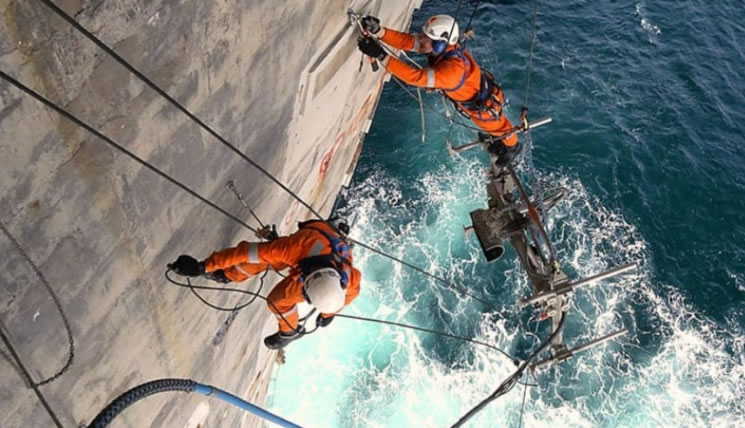
Access changes the picture too. A joint that would be rotated into the flat position in a shop has to be welded exactly where it sits, often overhead, often through a restricted window, sometimes from a rope access position. That has a direct consequence for qualification: the welders mobilised need to hold positional qualifications that match the real joints, not the convenient ones. Checking that before mobilisation is far cheaper than discovering it on the deck.
Temperature control is the third difference. Preheat requirements that are routine onshore become a logistics question offshore, because the heating equipment, the power supply and the temperature monitoring all have to be planned into the scope alongside the welding itself.
Where campaigns lose time
Three failure modes account for most of the delay we see on fabrication scopes.
The first is a qualification mismatch discovered on arrival. The welders are competent, but their certificates do not cover the material grade, the thickness or the position that the actual repair requires. The work stops while new qualifications are arranged, which offshore means a vessel or a helicopter movement.
The second is consumable control. Low hydrogen electrodes that have been exposed to humidity introduce hydrogen into the weld metal, and hydrogen induced cracking can appear hours or days after the weld has cooled and passed a visual check. A weld that looked acceptable on Tuesday can fail inspection on Thursday.
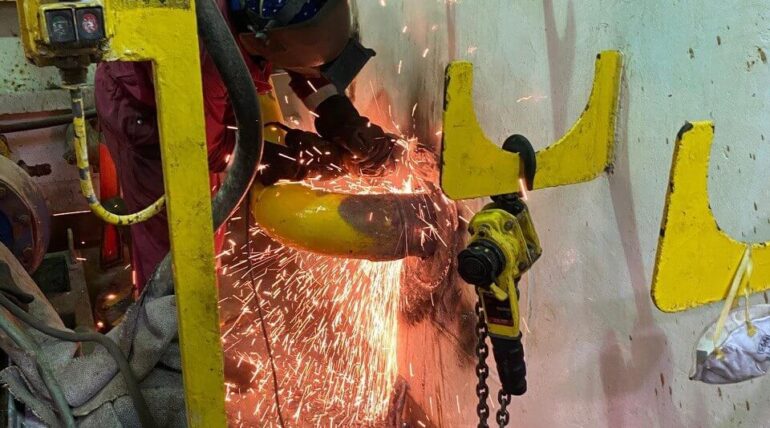
The third is fit up. Poor alignment, excessive root gaps and contaminated preparations produce defects that no amount of welder skill will fix. Grinding, cleaning and presenting the joint correctly is not preparation for the job, it is part of the job.
Inspection and acceptance
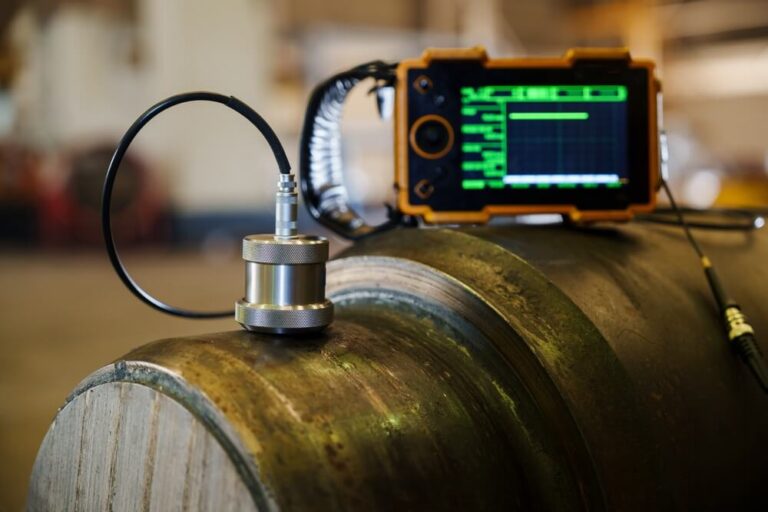
Completed welds are proved by non destructive testing, and the method follows the joint. Full penetration butt welds in pressure retaining components generally call for volumetric examination, either radiography or ultrasonic testing. Fillet welds and structural attachments are usually examined for surface breaking defects using magnetic particle inspection on ferromagnetic materials, or dye penetrant where the material is not magnetic.
The choice of method deserves thought, because each has blind spots. We cover this in more detail in our guide to choosing inspection methods that produce decisions. The general point holds here: a method that cannot detect the defect the joint is likely to contain adds cost without adding confidence.
Acceptance criteria come from the governing code and the client specification. They should be agreed and written down before the work starts, because arguing about acceptance limits with a completed weld in front of you is a poor use of offshore time.
Planning welding into a campaign
Fabrication work rarely stands alone. A structural repair usually needs access built or rigged, surface preparation and inspection before welding, then coating afterwards to protect what has just been installed. Sequencing those trades so that each one has the workface when it needs it is the difference between a tight campaign and a long one.
Rope access changes the arithmetic here, because the same technicians can often prepare, weld, inspect and coat without the scaffolding cycle in between. Our comparison of rope access and scaffolding sets out where that saving is real and where it is not.
Getting it right the first time
Coded welding offshore is a documentation discipline as much as a manual skill. The welds that pass are the ones where the procedure was qualified for the joint, the welder was qualified for the position, the consumables were controlled, and the inspection method could actually find the defect that mattered. Everything else is rework at offshore rates.
Integra Offshore provides offshore fabrication and coded welding services with qualified procedures and coded welders mobilised against the joints your scope actually contains. If you have a repair scope to plan, talk to us before the mobilisation window closes.