A dropped object does not need to be large to be lethal. A hand tool released from height on a platform carries enough energy to kill, and the energy rises with the square of nothing at all: it rises simply with the distance it falls. That is why dropped object prevention concentrates on the mundane, because the mundane is what falls.
Static and dynamic drops
It helps to separate two categories, because they have different causes and different controls.
A static dropped object falls from a position where it was installed or left. Corrosion has consumed a fixing, vibration has loosened a bolt, a clamp has failed, or an item was placed at height and never secured. These are failures of installation and inspection, and they are found by survey.
A dynamic dropped object is released by an activity in progress. Something is dropped during a lift, knocked from a grating, or released by a person working at height. These are failures of practice and equipment, and they are addressed by tethering, exclusion zones and habits.
Programmes that only address one category leave a large gap. Tool tethering does nothing about a corroded light fitting, and a survey does nothing about a spanner dropped during a lift.
What a dropped object survey looks at
A survey works systematically through the areas above where people work and walk. Typical findings repeat across facilities.
Fixings that have corroded, particularly in the splash zone and in areas of frequent wetting. Lighting units, cameras, antennae, junction boxes and small instrument installations whose brackets have deteriorated. Grating clips that are missing or loose. Handrails and stair treads with wasted attachments. Insulation cladding and sheeting where fixings have failed and panels can lift or fall. Items left at height after previous work, which is a persistent finding on any facility with an active work programme.
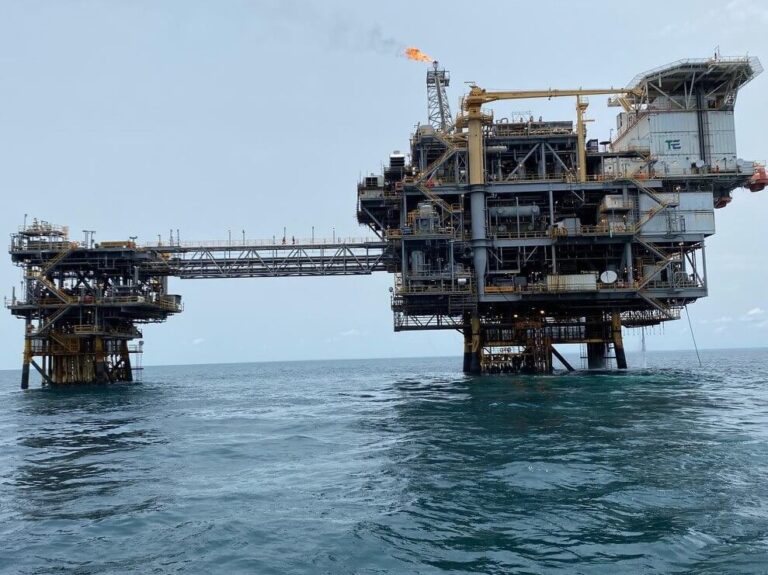
Derricks, flare towers and crane booms deserve particular attention because they are tall, they vibrate, and inspecting them requires deliberate access rather than a walk around.
Secondary retention
The principle behind secondary retention is straightforward: anything at height should have a second, independent means of staying where it is. If the primary fixing fails, the item is caught rather than released.
In practice this means safety slings or wires on items that could fall, retention on light fittings and panels, and safety pins or clips on connections that vibration could loosen. The important word is independent. A secondary retention that shares the same corroded bracket as the primary is decorative rather than protective.
Retention systems are themselves subject to corrosion offshore and need to appear in the inspection routine. A wire installed a decade ago and never looked at since is an assumption rather than a control.
Working at height without dropping things
For work in progress, control comes from equipment and habit together. Tools used at height are tethered, and tethering is only useful if the anchor point is rated and the person actually uses it. Buckets and bags for transporting equipment are closed rather than open. Exclusion zones below active work are established and, more importantly, respected, which requires that the barriers are meaningful and that people understand why they are there.
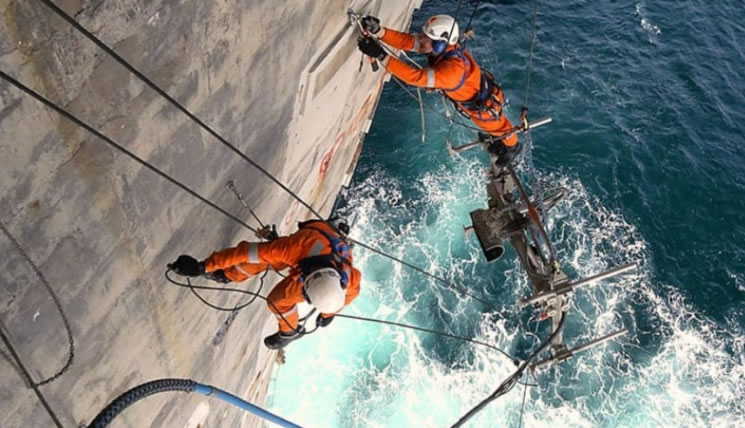
Rope access teams tend to be strong in this area, because the discipline is inherent to how they work. IRATA training addresses equipment handling at height directly, and the culture around it is established rather than optional. Our post on what the IRATA levels mean sets out how supervision is structured, which is part of why the method carries this discipline well.
Reporting near misses honestly
The most valuable input to a dropped object programme is the report of the object that fell and hit nothing. Those events carry all the information about the failure with none of the consequence, and a facility that hears about them can act before the same failure occurs above someone.
That only happens where reporting is genuinely without blame. If a report leads to an investigation that feels like an inquiry into the reporter, reporting stops, and the facility loses its early warning. This is a cultural question rather than a procedural one, and it is decided by how the first few reports are handled.
Fitting prevention into the wider programme
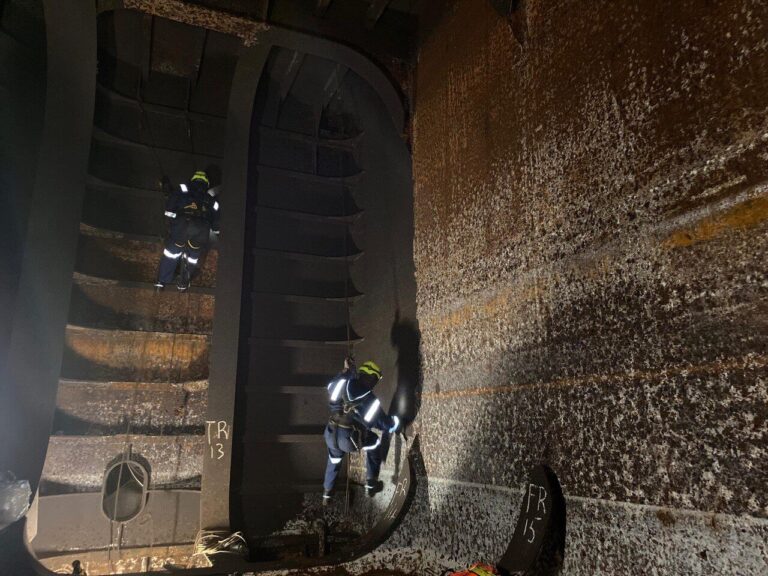
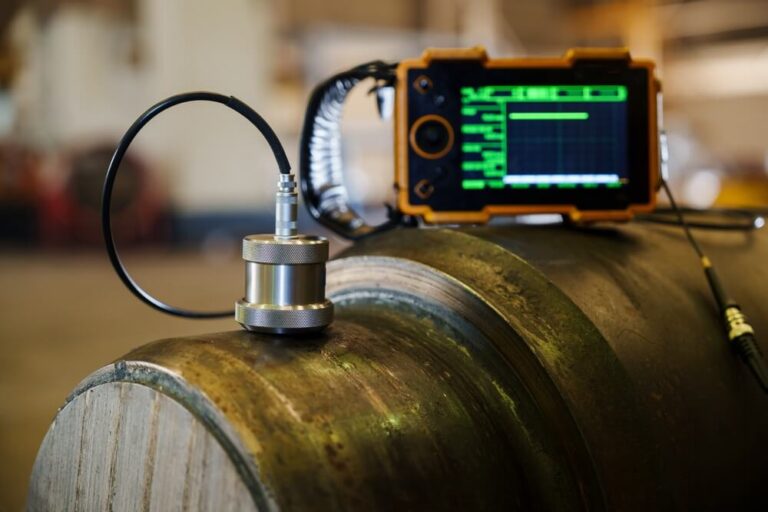
Dropped object surveys sit naturally alongside structural inspection, because both require access to the same high locations. Combining them makes efficient use of an access window: technicians reaching a member to take thickness readings can survey the fixings, brackets and retention in the same area at the same time.
That combination is one of the practical advantages of rope access, and it applies equally to the asset integrity programme. Findings from either survey feed the same repair planning process.
Routine beats campaign
Dropped object prevention responds to consistency rather than intensity. A facility that surveys a portion of its high areas every year, fixes what it finds, maintains retention systems and reports near misses honestly will outperform one that runs an intensive campaign every five years and lets things drift in between.
Integra Offshore delivers dropped object surveys and remedial work as part of our offshore services, using rope access teams who can reach and repair in the same visit. Talk to us about a survey scope.