Every offshore operator runs an inspection programme. Far fewer get useful decisions out of it. The gap is almost never a shortage of data. It is that the data arrives in a form nobody can act on, or it arrives about the wrong parts of the structure.
An inspection campaign should answer a question the operator actually has. Can this asset run to the next shutdown. Is this corrosion rate accelerating or stable. Does this weld need repair now or at the next opportunity. If the scope does not start from a question like that, the report tends to end up as a filed document rather than a maintenance decision.
Choosing the right inspection method
There is no general purpose technique. Each method sees a particular kind of defect and is blind to others, so the choice follows the degradation mechanism you expect rather than habit.
Visual and close visual inspection
General visual inspection covers ground quickly and finds the obvious: coating breakdown, gross deformation, missing fasteners, impact damage. It is the cheapest way to decide where to look harder.
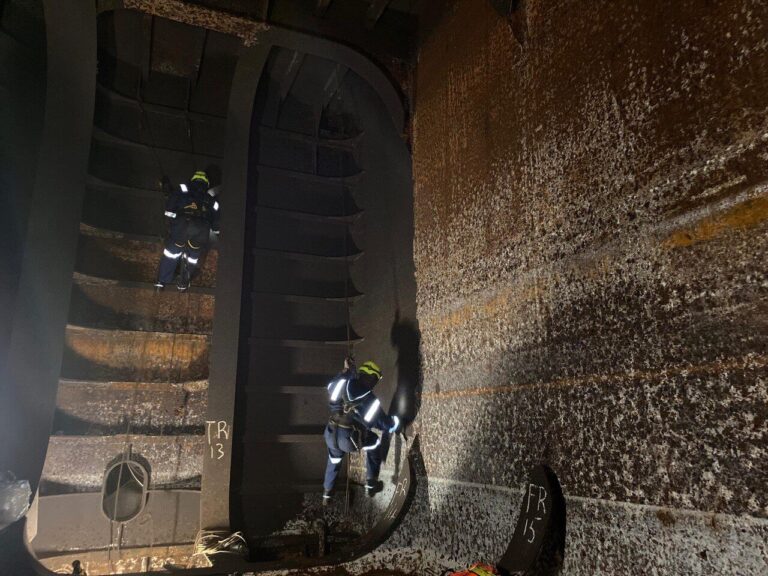
Close visual inspection is a different activity despite the similar name. The technician is within touching distance of the surface, usually after local cleaning, examining welds and connections for cracking, pitting and undercut. On a rope access campaign this is where most of the hours go, and it is genuinely skilled work. The value depends on the technician knowing what a fatigue crack looks like at an early stage.
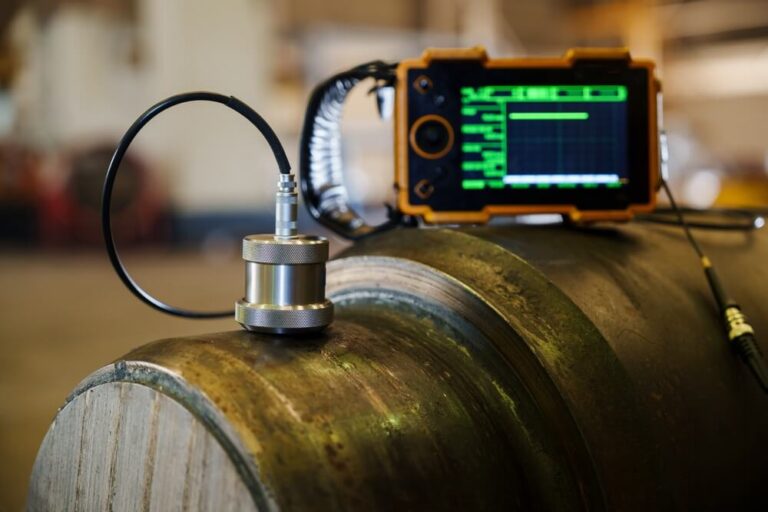
Ultrasonic thickness measurement
Ultrasonic testing measures remaining wall thickness, which is what you need for corrosion under insulation, internal erosion and general wall loss. It gives a number you can trend.
Trending is the point. A single thickness reading tells you the wall is 9.2 millimetres. Two readings two years apart tell you the corrosion rate, and the corrosion rate tells you the remaining life. That only works if the readings come from the same location, which means marked and recorded points rather than approximate ones.
Magnetic particle and dye penetrant
Both find surface breaking cracks. Magnetic particle inspection works on ferromagnetic materials and is the standard choice for weld inspection on structural steel. Dye penetrant works on materials that cannot be magnetised, including stainless and aluminium.
Both need proper surface preparation to be meaningful. Running MPI over a coated or dirty weld produces a clean result that means nothing, which is worse than no inspection at all because it creates false confidence.
Where structures actually fail
Degradation is not evenly distributed, and inspection budget should not be either.
Nodes and welded connections carry the fatigue loading, and that is where cracking initiates. Splash zone steel takes the worst corrosion. Areas under insulation hide corrosion precisely because they cannot be seen. Interfaces where dissimilar metals meet set up galvanic cells. Anywhere water collects and cannot drain will corrode faster than the surface around it.
Drains, brackets, small bore pipework and secondary steelwork are routinely under inspected because they are not primary structure. They are also where a lot of leaks and dropped object risks originate.
Access determines what gets inspected
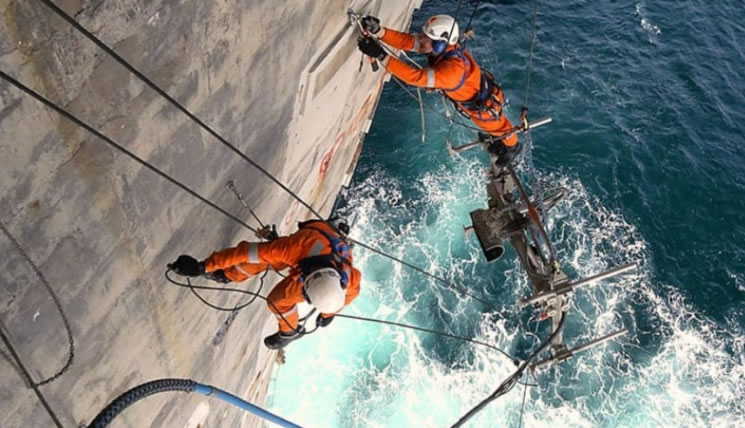
Inspection coverage is limited by reach. A programme that specifies close visual inspection of every node is only as good as the crew’s ability to physically get to every node within the campaign window.
This is where access method feeds back into data quality. Scaffolding a structure for inspection is slow and expensive, so scopes get trimmed to what the scaffold covers, and the trimmed areas quietly become the areas nobody has looked at for years. Rope access changes the economics enough that coverage can follow the risk rather than the access cost, which we set out in our comparison of rope access and scaffolding.
Combining disciplines in one team helps too. A technician who is both IRATA certified and NDT qualified inspects and reports in a single visit. Splitting those roles means rigging access twice, or a rope team ferrying an inspector who cannot work independently on ropes.
Reporting that supports a decision
A finding is only useful if someone downstream can locate it, judge it and track it.
That means every anomaly needs a location precise enough to return to, ideally referenced to the same drawing grid the engineering team uses. It needs a photograph with scale in frame. It needs a measurement rather than an adjective, because “significant pitting” cannot be trended and “2.1 millimetre deep pitting over an area of 40 by 60 millimetres” can. It needs a severity assessment against agreed criteria, so that findings can be ranked rather than treated as a flat list.
It also needs to connect to the previous campaign. An anomaly register that carries forward, showing what was found last time and what has changed, turns a series of one off inspections into a picture of how the asset is behaving over time.
Fitting inspection around production
The hardest constraint is usually not technical. It is that the asset is producing and the operator does not want it to stop.
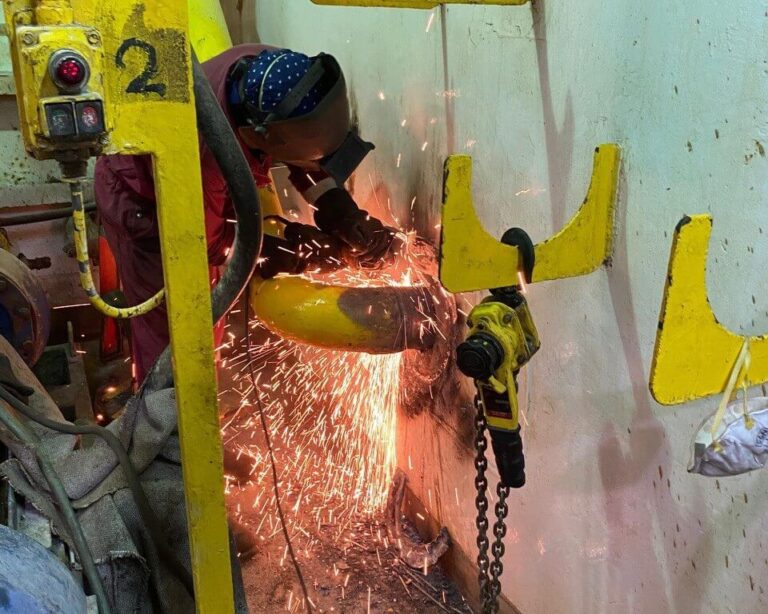
Much inspection work can run alongside production with the right permits and isolation, particularly external structural work. Confined space entries and anything requiring hot work are different and generally need a shutdown window, which makes them worth bundling carefully so a single window covers as much as possible.
Planning around this is a scoping exercise as much as an engineering one, and it is a large part of what turnkey offshore project management is for: sequencing inspection, repair and follow up work so the asset stops once rather than three times.
Building a programme that earns its cost
Good inspection is not about inspecting more. It is about inspecting the right locations, with methods that suit the degradation mechanism, and reporting in a form that produces a maintenance decision.
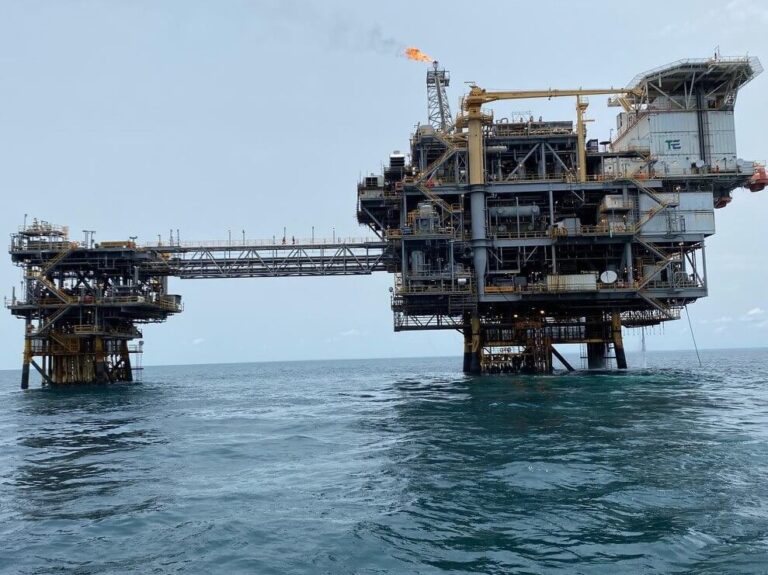
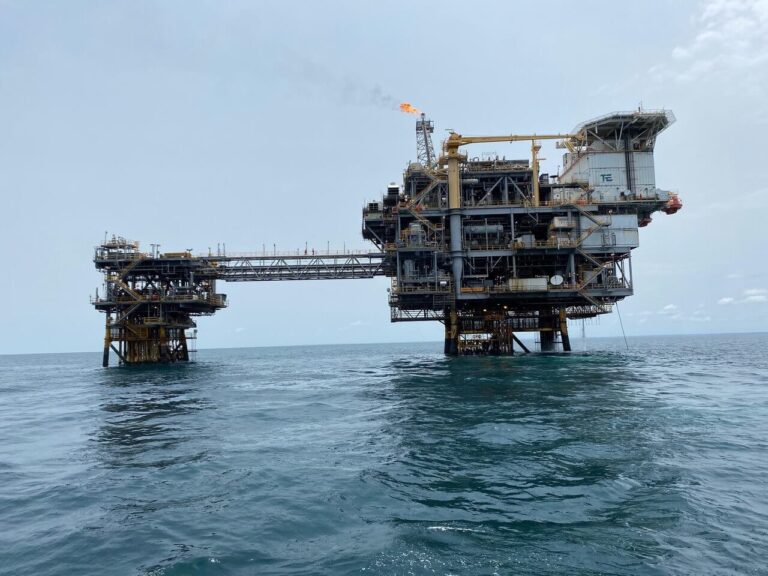
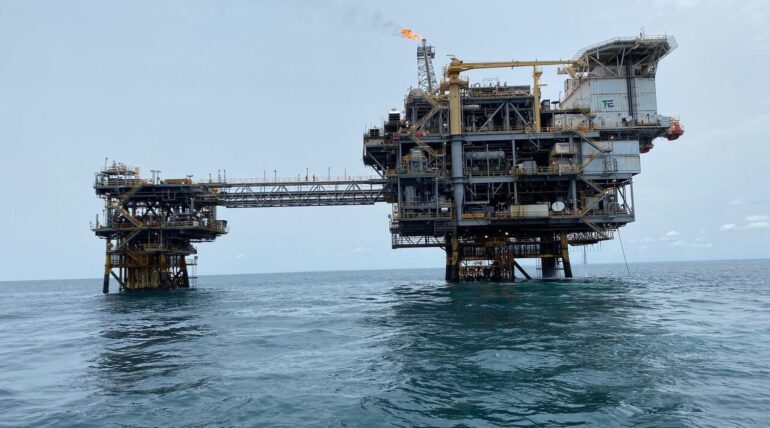
Integra Offshore delivers asset integrity and inspection services offshore using IRATA certified technicians with NDT qualifications, across fixed platforms, FPSOs and drilling units. If you are scoping a campaign and want to talk through method selection or coverage before it is fixed, contact us.