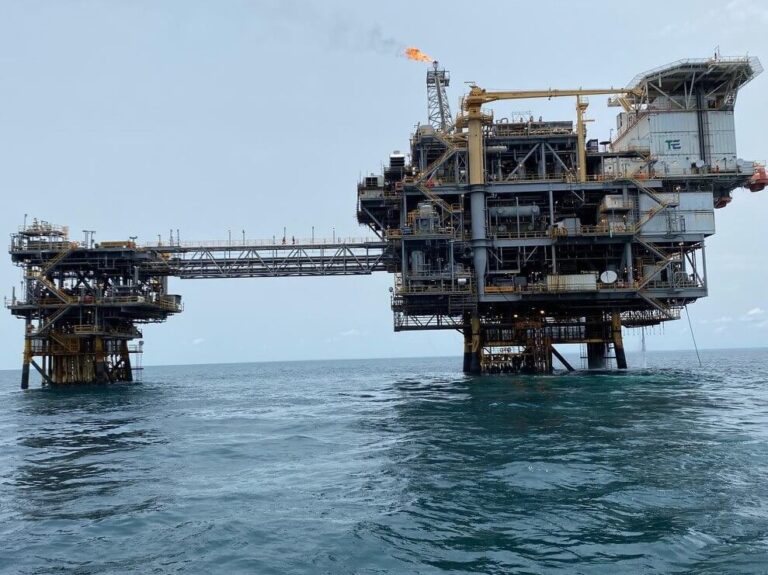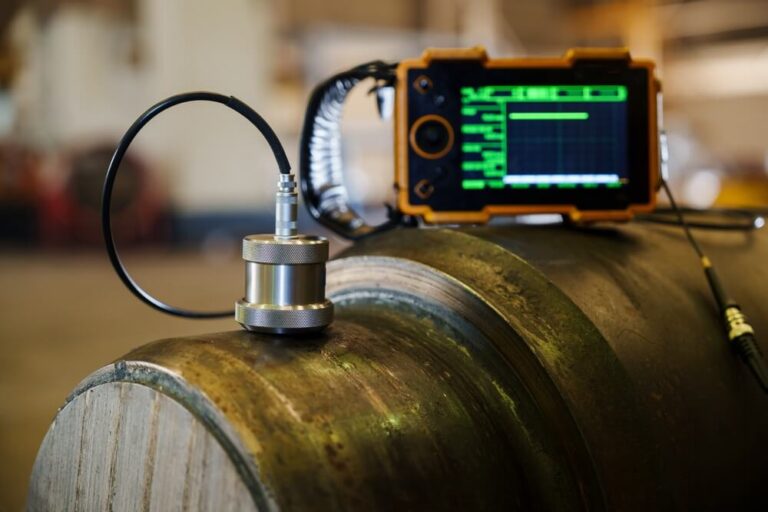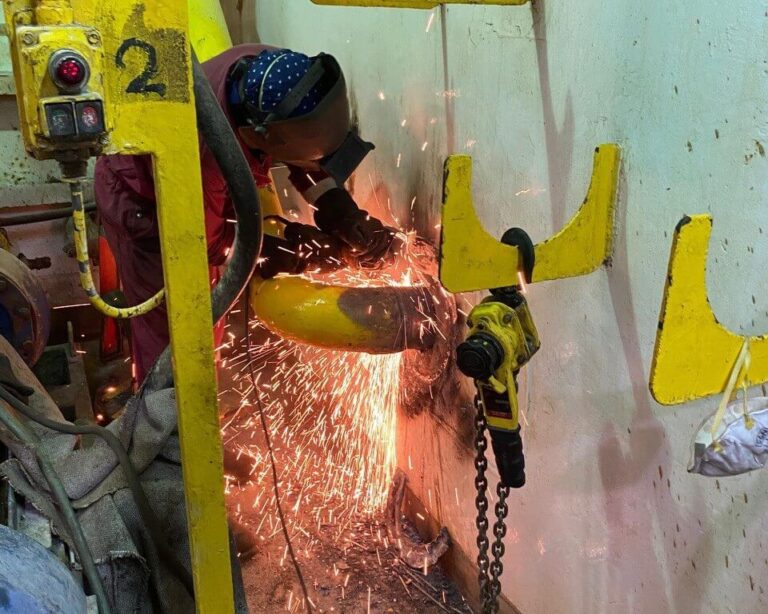
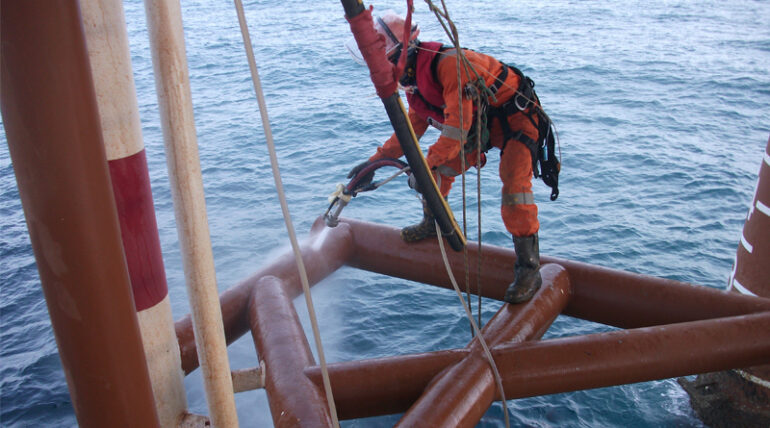
Every offshore operator faces the same question when a structure needs inspection, blasting, painting or a welded repair: how do we get technicians safely to the workface? For decades the default answer was scaffolding. Today, on fixed platforms, FPSOs and drilling units alike, rope access has become the method of choice for the majority of at-height and confined-space work.
This guide compares the two methods on the three factors that actually decide the outcome of a maintenance campaign: cost, downtime and safety.
What offshore rope access actually is
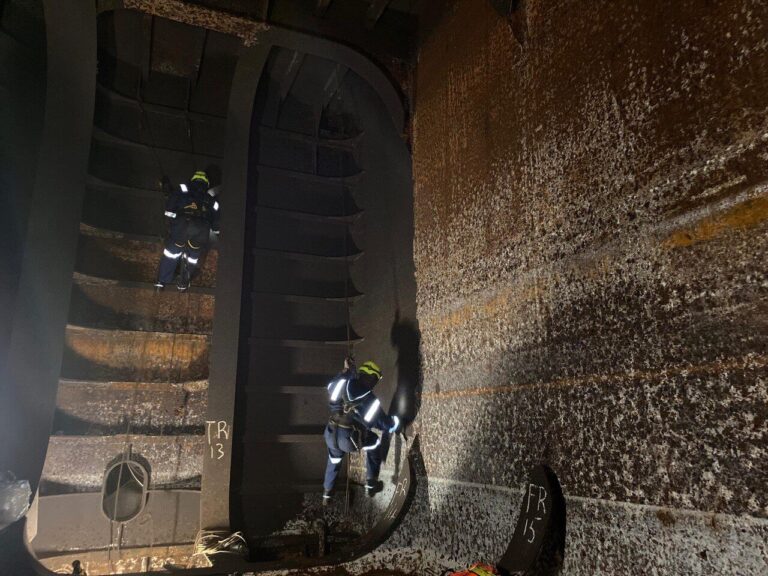
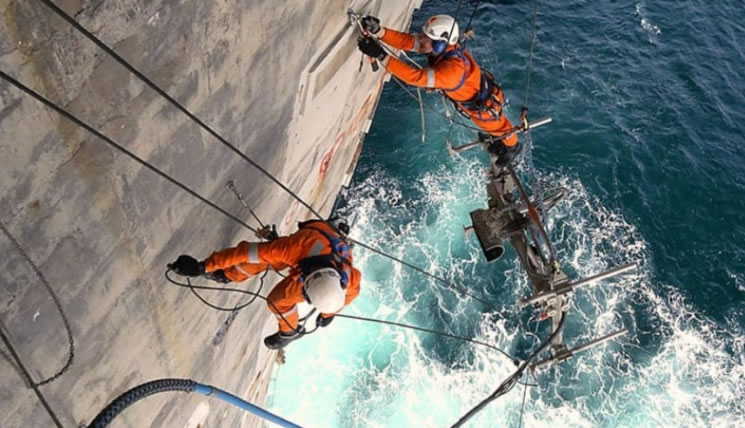
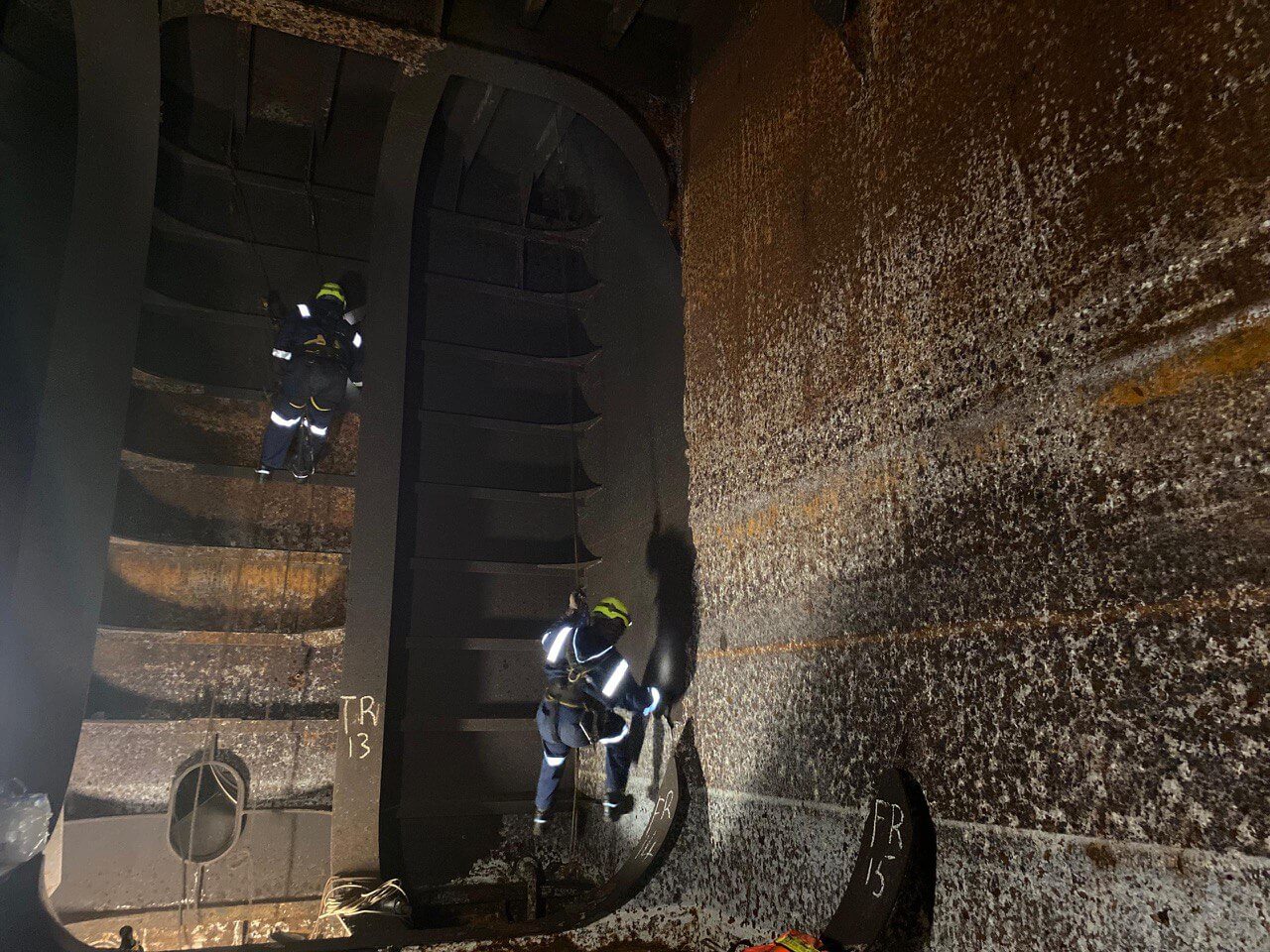
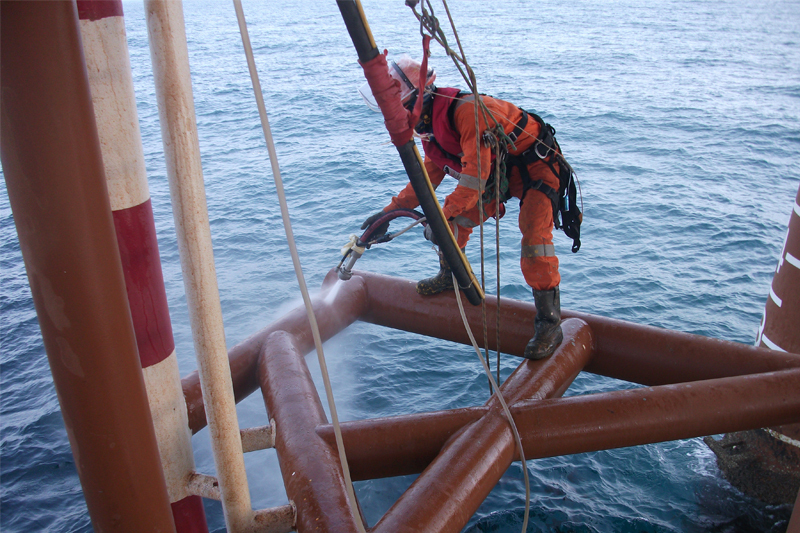
Rope access is a working-at-height discipline in which technicians reach the workface on two independently anchored ropes — a working line and a back-up line — using certified harnesses, descenders and back-up devices. The discipline is governed internationally by IRATA (the Industrial Rope Access Trade Association), which sets the training, supervision and rescue standards the offshore industry relies on.
The critical point that operators sometimes miss: rope access is a means of access, not a trade in itself. The value comes from technicians who are dual-skilled — an IRATA Level 2 who is also a coded welder, or a Level 3 supervisor who is also an NDT specialist. One person, one mobilisation, both skills.
Cost: where the money actually goes
Comparing day rates alone is misleading. A scaffolding quotation looks competitive until you add the erection crew, the dismantling crew, the material transport, the deck space and the inspection sign-offs. The honest comparison is total cost per completed workface.
| Cost factor | Scaffolding | Rope access |
|---|---|---|
| Set-up before work begins | Days to weeks; separate erection crew | Hours; the working crew rigs its own ropes |
| Material transport & logistics | Significant tonnage, boat and crane time | Personal equipment only, hand-carried |
| Deck and POB footprint | Large crew, heavy material storage | Small crew, minimal storage |
| Dismantling | A second full mobilisation | Ropes derigged by the crew at completion |
| Cost profile on short jobs | Set-up dominates the total | Highly efficient |
| Cost profile on long, static jobs | Set-up amortises well | Advantage narrows |
On inspection campaigns, spot repairs and short coating works, rope access frequently completes the scope before a scaffold crew would have finished erecting. On a single, long-duration job at one fixed location, that advantage narrows considerably — which is exactly why the honest answer is method selection per scope, not blanket preference.
Downtime: usually the largest number on the page
For a producing asset, the cost of the contractor is rarely the biggest figure involved. Deferred production is. Every day a structure waits on scaffold erection is a day of maintenance not being performed.
Rope access changes the shape of the campaign. Because the access crew and the working crew are the same people, work starts on day one. Scopes that would require a shutdown window can often be executed live, and a team can relocate to a different area of the asset within hours rather than repeating a full erection cycle.
This is the reasoning behind our asset integrity and inspection services — the objective is not simply to inspect, but to inspect without taking the asset off line.
Safety: what the record shows
The common assumption is that rope access must be the riskier option because the technician is visibly suspended. The industry data does not support this. IRATA publishes an annual work-and-safety analysis covering many millions of working hours, and rope access consistently records one of the lowest incident rates of any industrial work-at-height method.
There are structural reasons for this:
- Two independent systems at all times. A working line and a back-up line, separately anchored. No single point of failure.
- Rescue capability is built in. Every IRATA team includes technicians trained and equipped to recover a colleague without waiting for external rescue — a decisive factor offshore.
- Continuous supervision. A Level 3 supervisor is present on site for the duration of the work.
- Less exposure overall. Scaffolding creates its own hazards during erection and dismantling — dropped objects, manual handling injuries, and hours of work at height before the actual maintenance task even starts.
The safety case for rope access rests on the competence of the team. Certification currency, logbook hours and supervisor ratio are the things worth auditing before award.
Where scaffolding is still the right call
A contractor who tells you rope access is always the answer is selling, not advising. Scaffolding remains the better method when:
- The task requires a stable working platform for heavy tooling or extended fabrication
- Multiple trades must work the same area simultaneously over a long period
- Material or equipment loads exceed what a suspended technician can safely manage
- The workface geometry offers no viable anchor points
In practice, most large campaigns end up hybrid: scaffolding for the heavy static scopes, rope access for inspection, coatings, spot repairs and everything the scaffold cannot economically reach.
Seven questions to ask before you award the contract
- Are the certifications current, and can you see the logbooks? IRATA certification is valid for three years. Ask for the certificates and the logged hours, not a statement of compliance.
- What is the supervisor ratio? IRATA requires a Level 3 on site. Ask how many technicians each supervisor is covering.
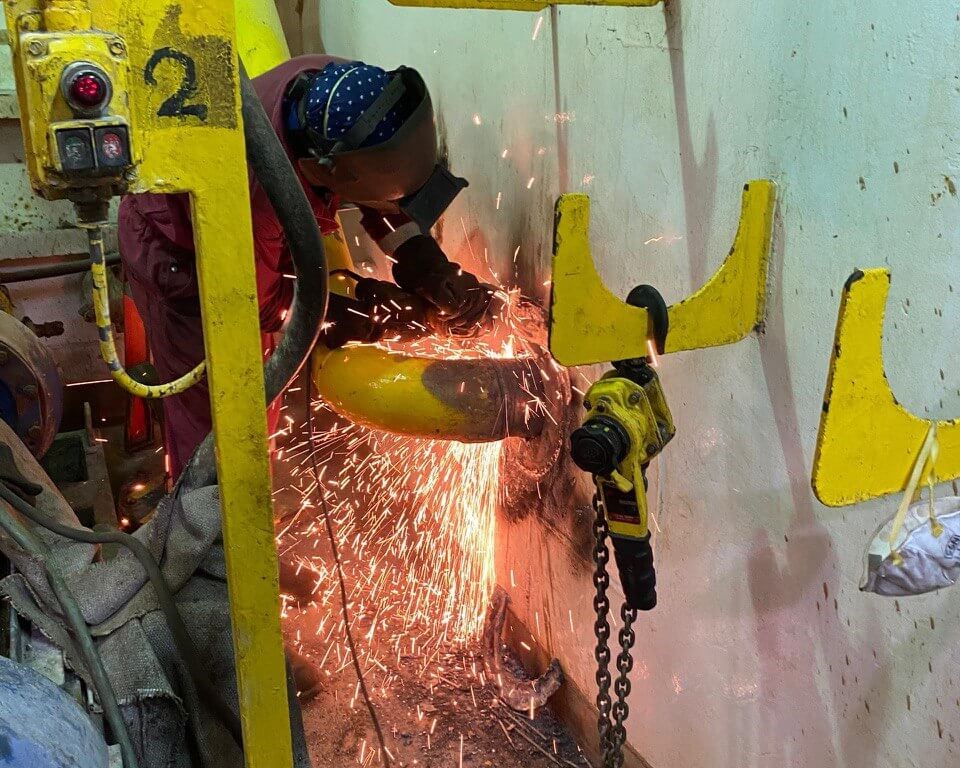
- Are the technicians dual-skilled? A rope access technician who is also a coded welder or NDT operator halves your mobilisation.
- What is the documented rescue plan for this specific asset? A generic plan is a warning sign.
- Who owns and inspects the equipment? Ask for the inspection records for the ropes and hardware being mobilised.
- What third-party approvals are held? Client and certifying-body approvals indicate the contractor has already passed someone else’s audit.
- How is the work reported? Inspection findings are only useful if they arrive in a format your integrity management system can consume.
Frequently asked questions
Is rope access cheaper than scaffolding?
For short-duration, multi-location and hard-to-reach scopes, usually yes — often substantially, once set-up and dismantling are included in the comparison. For single-location, long-duration work requiring a heavy working platform, scaffolding may be more economical. Compare total cost per completed workface, not day rates.
Is rope access safe offshore?
Yes. IRATA’s published annual safety analysis shows rope access to be among the lowest-incident work-at-height methods in industry, primarily because of the dual-rope principle, mandatory on-site supervision and built-in rescue capability.
What is IRATA certification?
IRATA is the international governing body for industrial rope access. Technicians are certified at Level 1 (technician), Level 2 (advanced, able to perform rigging and rescue) and Level 3 (supervisor). Certification is renewed every three years and backed by a logbook of recorded hours.
Can rope access technicians perform welding and NDT?
Yes, where the technician holds the relevant trade qualification in addition to their IRATA certification. This dual-skilled model is standard on well-run offshore campaigns and is the main source of the efficiency gain.
How Integra Offshore approaches method selection
We assess each scope on its own terms. Where rope access delivers the asset back to you faster and more safely, we deploy IRATA-certified rope access teams and technical manpower. Where the scope calls for coded welding and fabrication or coating and corrosion protection, our technicians hold both the trade qualification and the access certification — so one mobilisation covers both.
Our position is straightforward: extending asset life and protecting uptime is the objective. Access method is a means to it.